Sensory Squeeze Rollers & Steamrollers: Deep Pressure for Autism & ADHD
Clinic steamroller vs home squeezer: skip rules, tension checks, and listing notes — not a cortisol device.
DeepPressureStimulation.com editorial team
Site desk, DeepPressureStimulation.com ·
📖 Table of Contents
Affiliate Disclosure: As an Amazon Associate we earn from qualifying purchases. Some links on this page are affiliate links - if you buy through them, we receive a small commission at no extra cost to you. This never influences which products we recommend. Full disclosure policy · How we make money
Affiliate Disclosure: As an Amazon Associate we earn from qualifying purchases. Some links on this page are affiliate links - if you buy through them, we receive a small commission at no extra cost to you. This never influences which products we recommend. Full disclosure policy · How we make money
Updated September 12, 2026 | Byline: DeepPressureStimulation.com editorial team
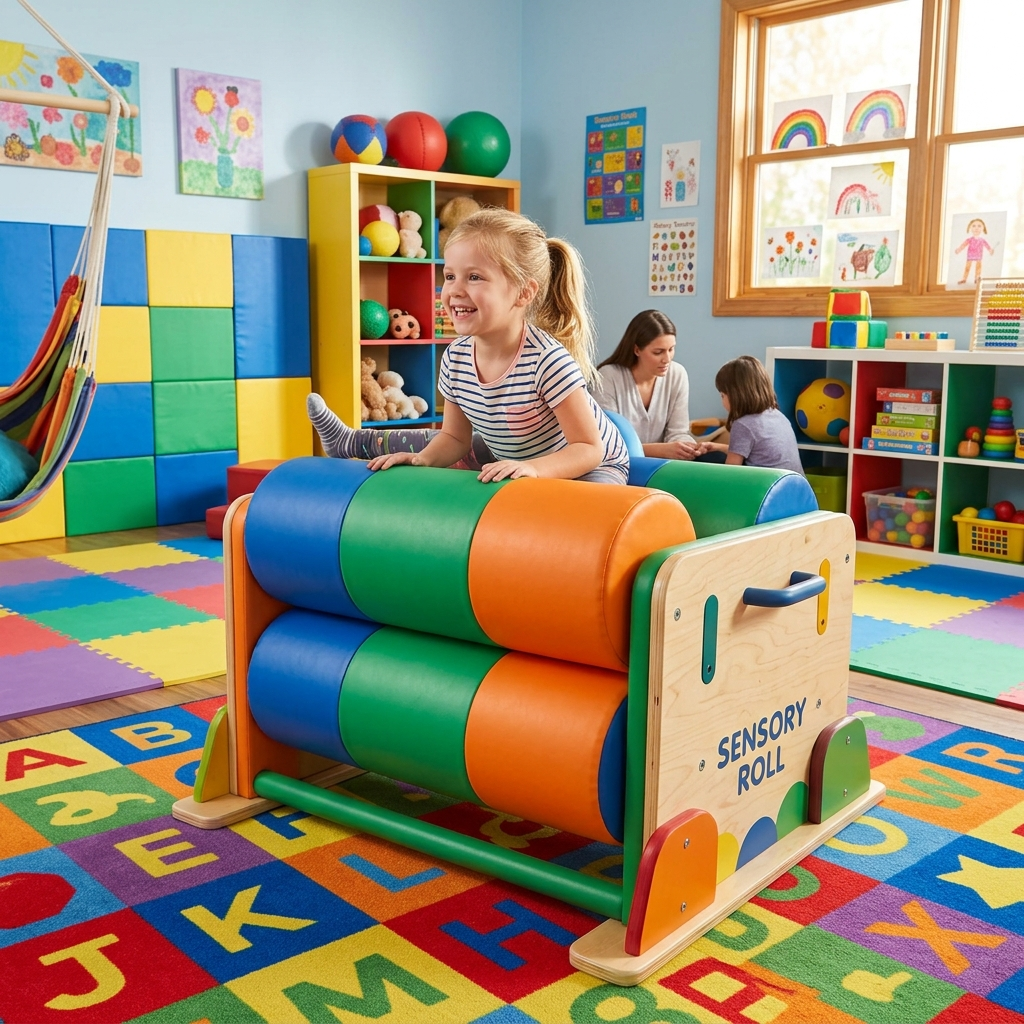
A sensory squeeze roller — also sold as a steamroller or squeezer — is a framed pair of foam rollers you crawl through for a short, firm squeeze. Clinics have used this format for years. Amazon titles now treat it like a fidget. That is the mismatch this page is about.
This is a research-desk buying note from the DeepPressureStimulation.com editorial team. We compare manufacturer size charts, working-load numbers, and published sensory-integration write-ups. We did not run a roller lab, and we are not a licensed occupational therapy practice. A squeeze roller is not a treatment for autism, ADHD, anxiety, or sensory processing disorder. If the user cannot crawl out independently, skip the cart.
If you wanted Temple Grandin’s hinged hug box, start on the squeeze machine guide. If you wanted a room layout, use the sensory room design guide. If you wanted a wearable, go back to the sensory tools hub.
Desk takeaway: Buy a squeeze roller only when the user can crawl in and out without help, the floor can take a 30–50 lb frame, and you can name a 5–10 pass break — not an all-afternoon hang.
What a squeeze roller is, and what it is not
A steamroller is two (sometimes four) foam cylinders on a wood or metal frame. Elastic or bungee bands set how hard the rollers press. The user crawls prone, head first, arms forward, and the rollers press the trunk and hips as they move through.
That is dynamic pressure: input while the body is moving. It is not a weighted blanket (still, downward). It is not a body sock (stretch you wear). It is not Grandin’s squeeze machine (you lie still and set the squeeze with a lever).
Amazon carousels mix those four products. A “hug machine” title may be a roller, a body sock, or a foam seat. Open the photos for a frame and rollers before you compare prices.
| Tool | How the pressure happens | Typical setting | Skip if |
|---|---|---|---|
| Clinic steamroller (Southpaw-style) | Adjustable bands, wipeable vinyl rollers | OT gym, school sensory room | No 3×3 ft floor, no adult who can spot |
| Home squeezer (Fun and Function-style) | Bungee cords, foam rollers, birch frame | Playroom or sensory corner | User cannot crawl out, or listed load is below body weight |
| Squeeze machine | Hinged panels, user-controlled lever | Clinic or custom DIY | You wanted a crawl-through, not a lie-still box |
| Body sock | Lycra stretch you wear | Travel, small rooms | You wanted high-intensity joint input |
The original clinic format traces to Jean Ayres’ “mangle” idea: crawl through rollers for proprioceptive input while practicing motor planning. Southpaw still sells that as the Steamroller Deluxe. Fun and Function sells a home-clinic hybrid as the SensaSoft Squeezer. Those two listings are the ones to compare. A no-name “autism steamroller” with no working load is not a third brand. It is an unknown frame.
How the pressure is supposed to help
Firm, distributed pressure is the same deep-pressure idea behind vests and blankets: some nervous systems read it as organizing. A roller adds heavy work. The user has to push, pull, and plan a way out. Southpaw’s own copy lists motor planning, body awareness, and shoulder stability alongside the squeeze (Southpaw Steamroller Deluxe).
That is a stronger claim than a hormone-dose shopping line. We do not have a roller-specific randomized trial that measures stress chemicals. Grandin’s 1992 squeeze-machine paper is about a different device (PubMed). AOTA still frames sensory tools as individualized, therapist-guided practice, not a one-SKU protocol (AOTA).
Desk rule: treat a roller as a short, supervised break you can stop. If the user freezes, cries, or cannot back out, loosen the bands or put the frame away. Do not stack a roller pass on a tight vest and a lap pad in the same ten minutes. You will not know which input helped.
Clinic steamroller vs home squeezer
Southpaw Steamroller Deluxe
Southpaw is the clinic catalog name. The Deluxe frame is listed at 33.5” L × 29” W × 16” H, with 7” × 22.5” rollers, and a 300 lb working load (Southpaw, Rehabmart spec table). Older versions of this page said “200 lb.” That was wrong. Use the published working load, then still ask whether an adult can actually crawl through a 16” tall opening.
Pressure changes with the tension bands. Southpaw ships two sets. Replacement bands are a separate SKU. If a listing does not mention spare bands, assume you cannot replace them when they sag.
Vinyl-covered foam is the clinic reason this exists: wipe-down between users. It is not a living-room ottoman. The frame is heavy enough (about 31 lb on reseller spec sheets) that you do not want to drag it across a rental hallway every afternoon.
Fun and Function SensaSoft Squeezer
Fun and Function’s current name is SensaSoft Squeezer, not a generic “squeeze roller.” Single and double models are listed for ages 4+; the triple is ages 6+. All three list a 175 lb hold. Single: 28.7” L × 32.7” W × 28.3” H, 51 lb. Double: 45” L. Triple: 62.5” L, 95 lb (Fun and Function).
Bungee cords on the sides set compression. Cords are sold as replacements. Vinyl is the wipe-clean version; brushed suede is the living-room version that you cannot sanitize the same way.
175 lb is not “adult gym equipment.” A 190 lb autistic adult does not belong on this SKU. That adult needs the Southpaw working load, a body sock, or a wearable — not a kids squeezer sold as a steamroller.
DIY PVC and pool-noodle frames
Forum builds exist: PVC, bungee, pool noodles in fleece. They are a way to test whether crawl-through pressure is even interesting before you spend clinic money. They are not a Southpaw. Noodles flatten. PVC joints walk. There is no published working load.
If you build one, keep the gap tall enough that the user can bail sideways, and do not leave a child in it. The DIY deep pressure guide is the cheaper test path.
Compare sensory squeeze roller listings on Amazon only after you have a brand name and a load number. Search is not a model.
Who a roller is actually for
- Sensory seekers who already crash into furniture and can follow “crawl through, then stop.” The roller is a bounded version of that crash.
- Kids 4+ on a Fun and Function squeezer, or a mixed-age clinic on a Southpaw, with an adult who will spot the first month.
- School or OT gyms that need wipeable vinyl and a published working load.
- Some autistic adults on a 300 lb clinic frame — if they fit the opening and can exit without help.
It is a weak first buy for a toddler, a person who panics in tight spaces, or a household that wanted bedtime pressure. Bedtime is a compression sheet or a sized blanket, not a crawl-through in the dark.
A sensory diet can include 5–10 passes before homework. It should not include unsupervised “hang out inside the rollers” unless an OT wrote that plan and the user can still talk.
When to skip a sensory squeeze roller
Skip the cart if the user cannot crawl out without help. Independent exit is the whole safety test. A toddler who still army-crawls, a child who goes limp when overwhelmed, or anyone with low tone in the neck and shoulders does not belong between two rollers.
Skip if you do not have a clear floor rectangle. Fun and Function’s double squeezer is 45” long. Southpaw is shorter but still a 29” wide obstacle. A hallway is not a sensory room.
Skip if the listed working load is below the user’s body weight, or the listing has no load at all. “Holds kids and adults” is not a number.
Skip if the user already panics in a body sock or a snug shirt. A roller is a tighter, moving version of that trap.
Skip a foam-only “steamroller” with no frame. Soft rollers that sit on the floor are a different product and a different crush risk.
Skip stacking. Do not put a child in a roller wearing a tight compression vest. You will not know which input caused the tears.
If you wanted still, controllable full-body pressure, the squeeze machine guide is the better page. If you wanted a wearable for school, use the kids compression vest guide.
Listing checks before you buy a squeeze roller
These checks come from Southpaw and Fun and Function spec pages, not a crawl trial we ran.
- Name the SKU. Southpaw Steamroller Deluxe and Fun and Function SensaSoft Squeezer (single / double / triple) are different frames. “Sensory steamroller” is a category, not a model.
- Read the working load. Southpaw publishes 300 lb. Fun and Function publishes 175 lb. If Amazon copy says 200 lb on a Southpaw photo, believe the brand page.
- Match age to the chart. Fun and Function: 4+ (single/double), 6+ (triple). “Ages 3+” on a third-party listing is not that chart.
- Measure the opening, not the marketing height. A 16” Southpaw height is the frame, not a tunnel a tall teen slides through on their knees.
- Confirm how tension changes. Bands or bungees you can swap beat a fixed gap. Ask whether replacements are sold separately.
- Check the cover. Vinyl you can wipe is the classroom buy. Suede is a home texture buy. Fleece sleeves on a DIY noodle are a lint trap.
- Weigh the shipping box. A 51 lb squeezer is a two-person carry. A 95 lb triple is furniture.
- Note supervision language. Fun and Function says use with adult supervision. Treat that as a hard rule for kids, not a disclaimer you skip.
- Ignore cortisol copy. “Calms the nervous system in minutes” is not a dose. Pair any buy with a stop rule: out immediately for stuck hips, face-down panic, or a child who cannot talk.
Search Amazon for sensory steamroller only to compare photos against those checks. Do not buy the first “hug machine” tile.
Desk notes after the first hang
- Set the bands loose. The first pass should feel like a doorway, not a press.
- Adult on the exit side. Spot the shoulders, not the feet.
- Head first, arms forward. Southpaw resellers warn that sitting up inside the rollers over-strains the bands (Thinking Toys note).
- Count passes, not minutes. Five clean crawls beat a ten-minute linger.
- Wipe vinyl before the next sibling. Foam that stays damp is a smell problem, not a sensory feature.
- If the user wants out at pass two, that is data. Loosen or stop. Do not “help” by pushing them through.
A sensory diet can park those passes before a sit-down task. It should not replace a break the user chose.
Safety that a listing will not bold
- Never leave a child in or on the frame.
- Do not use as a jungle gym. Climbing the top roller is how frames tip.
- Keep hair, hoodies, and long straps out of the gap.
- Stop for tingling, breathing change, or a face that cannot lift.
- People with respiratory, cardiac, or recent-surgery flags need a clinician before any firm trunk squeeze.
- Ehlers-Danlos or other hypermobility is not a reason to crank the bands. External pressure is not joint bracing. Read the EDS deep-pressure page before you treat a roller as therapy.
For a wider autism-tool map, use the autism hub and the OT sensory products guide. Wear time for garments is a different problem; see the compression vest wear-time guide.
Frequently Asked Questions
Can adults use sensory steamrollers?
Some can, on a frame with a published working load above their body weight and an opening they can exit. Southpaw lists a 300 lb working load and says the Deluxe fits a small child up to an average-sized adult. Fun and Function’s squeezer stops at 175 lb. An adult who does not fit should use a wearable or a body sock, not a kids SKU.
What is the difference between a body sock and a squeeze roller?
A body sock is stretch you wear and walk in. A squeeze roller is a piece of furniture you crawl through for a short, directional press. The sock travels. The roller needs floor space and a spotter.
Are squeeze rollers safe for toddlers?
Fun and Function starts at age 4 for the single and double squeezer. Toddlers under 3 do not have a reliable crawl-out. Skip it.
How many passes is enough?
There is no protocol we can honestly publish. Clinic write-ups often use a short series of crawls, then a sit-down task. If the user is still seeking after ten passes, the roller may be the wrong input — try a vest, a lap pad, or a break that is not pressure.
Can I leave a child in the rollers to “calm down”?
Not unsupervised. Southpaw mentions hanging out prone to finish an activity, in a therapy setting. That is not a babysitter. If the child cannot talk or roll out, they should not be inside.
Frequently Asked Questions
Can adults use sensory steamrollers?
Yes, if the published working load is above their body weight and they can crawl out without help. Southpaw lists 300 lb. Fun and Function's squeezer lists 175 lb. A kids SKU is not an adult gym.
What is the difference between a body sock and a squeeze roller?
A body sock is wearable Lycra stretch. A squeeze roller is a framed crawl-through that gives a short, directional press. The sock travels; the roller needs floor space and a spotter.
Are squeeze rollers safe for toddlers?
Fun and Function starts at age 4 for single and double squeezers. Toddlers under 3 should not use a steamroller. Independent crawl-out is the safety test.
How many passes is enough?
There is no published dose. A short series of crawls, then a sit-down task, is the usual clinic pattern. If the user is still seeking after ten passes, try a different input.
Can I leave a child in the rollers to calm down?
Not unsupervised. Clinic copy about hanging out prone assumes a therapist in the room. If the child cannot talk or roll out, they should not be inside.
Sources
- Southpaw Steamroller Deluxe
- Rehabmart: Steamroller Deluxe specifications
- Fun and Function SensaSoft Squeezer
- PubMed: Grandin deep touch pressure
- AOTA practice resources
Related Guides
DeepPressureStimulation.com editorial team
Site desk, DeepPressureStimulation.com
The DeepPressureStimulation.com editorial team writes guides to weighted blankets, compression wear, and sensory tools from peer-reviewed research, published occupational-therapy guidelines, manufacturer specifications, and community reviews. The desk is not a licensed occupational therapy practice or medical clinic, and nothing here is medical advice — always consult a qualified healthcare provider before starting a new therapy.
Stay Informed, Stay Calm
Get science-backed articles on deep pressure therapy, weighted blankets, and sensory tools delivered to your inbox. No spam — just calm.
📬 No spam, ever. Unsubscribe anytime.